



Expert Insights on Pain, Spine & Joint Health

Back Pain
Exercises for Lower Back Pain: 5 Gentle Moves to Try
 Admin
- October 27, 2026
Lower back pain can make everyday activities like getting out of bed, sitting at a desk, bending to pick something up or walking for a while feel uncomfortable. When pain starts, many people stop moving because they are afraid of making the problem worse. However, for many cases of uncomplicated lower back pain, gentle movement and a gradual return to normal activity can help.
The right exercises for lower back pain depend on what is causing the symptoms, how severe the pain is and whether it travels into the buttock or leg. There is no single routine that suits everyone. The five gentle movements below may help some people improve flexibility and movement, but they are not a substitute for an assessment when symptoms are persistent, severe or unusual.
5 gentle lower back stretches and exercises
Start slowly, move within a comfortable range and avoid forcing a stretch. If a movement causes sharp pain, new tingling or worsening symptoms down the leg, stop rather than pushing through.

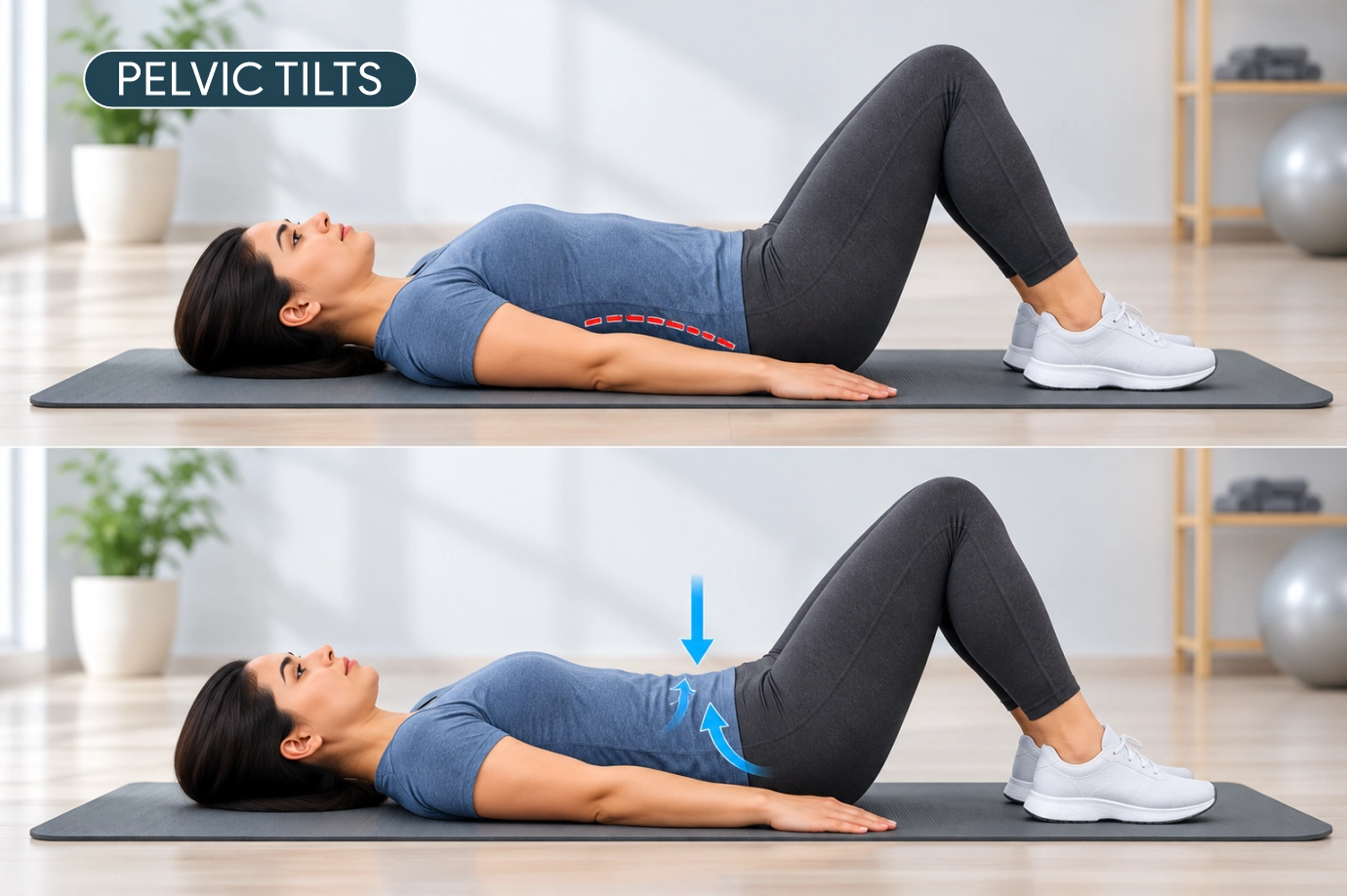
1. Pelvic tilts
Useful for: gentle lower-back movement
Lie on your back with your knees bent and feet flat on the bed or floor. Gently tighten your abdominal muscles and tilt your pelvis so your lower back moves closer to the surface beneath you. Relax and return to a comfortable starting position.
- Try 5 slow repetitions initially.
- Keep your breathing relaxed.
- Avoid pushing forcefully through the movement.
Pelvic tilts are a simple way to practise controlled movement without needing equipment. They should feel gentle rather than painful.
-
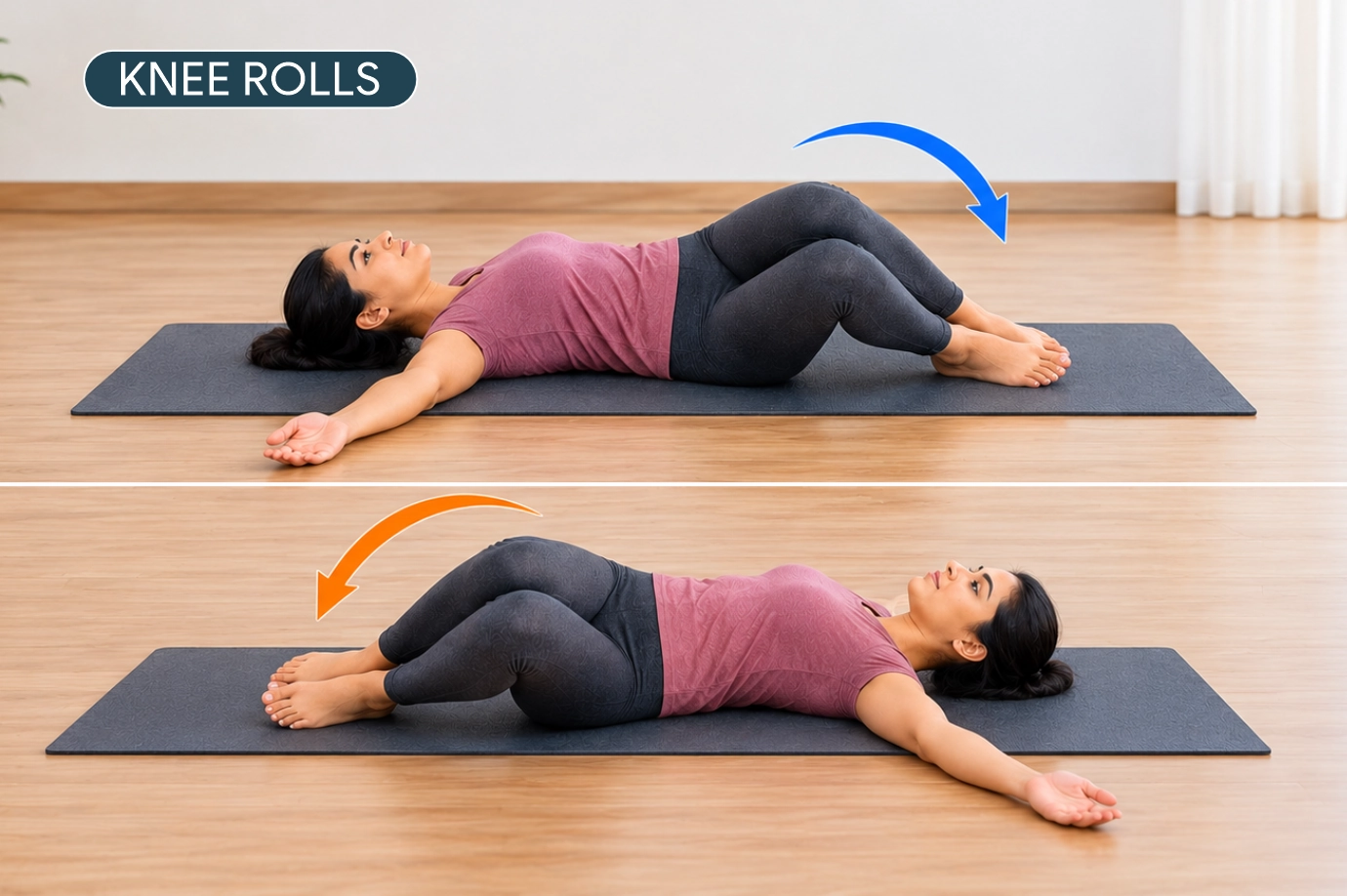
2. Knee rolls
Useful for: comfortable trunk rotation
Lie on your back with your knees bent and feet flat. Keeping your shoulders relaxed against the surface, slowly move both knees a small distance to one side. Return to the centre and repeat on the other side.
- Begin with 3-5 movements per side.
- Keep the movement small and controlled.
- Do not force your knees towards the floor.
If rotating your back increases pain or sends pain further down your leg, stop. This movement may not be appropriate for every cause of lower back pain.
-
3. Single knee-to-chest stretch
Useful for: gentle flexibility, if comfortable
Lie on your back with both knees bent. Bring one knee towards your chest and support it with your hands behind the thigh or over the shin, whichever feels more comfortable. Hold briefly, then lower the leg slowly and repeat on the other side.
- Start with a gentle 5-second hold.
- Repeat 2-3 times per side if comfortable.
- Do not pull forcefully or hold your breath.
This stretch is commonly included in back-exercise routines, but it is not suitable for everyone. If bending your back makes your symptoms worse, skip it and seek personalised advice.

-
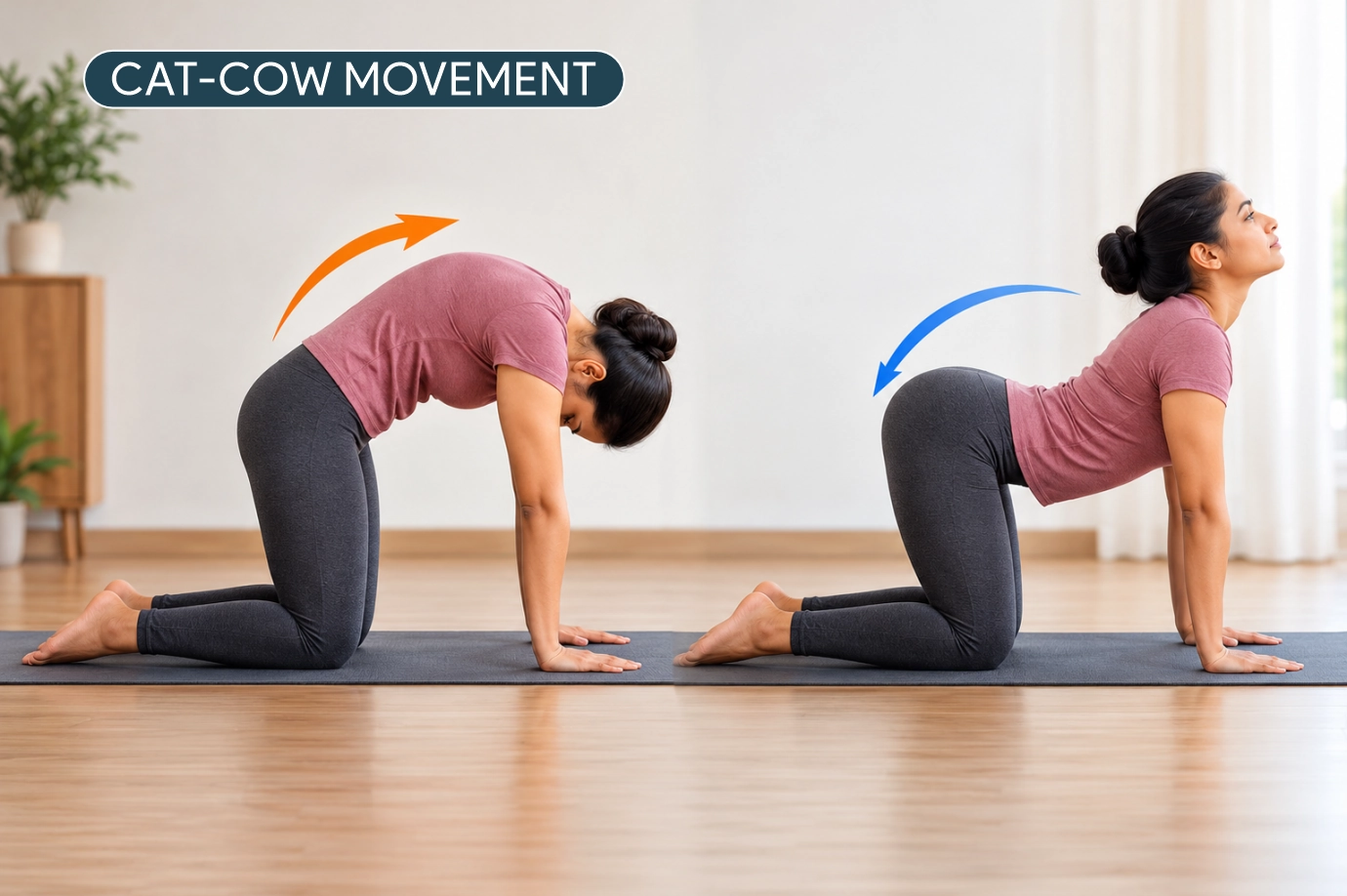
4. Cat-cow movement
Useful for: gentle spinal mobility
Start on your hands and knees, with your hands under your shoulders and knees under your hips. Slowly round your back a little, then gently move towards a comfortable arched position. Move smoothly between the two positions without forcing either end of the range.
- Begin with 3-5 slow repetitions.
- Keep your neck relaxed.
- Use a folded towel under your knees if needed.
If getting onto the floor is difficult or kneeling hurts your knees, choose a more comfortable movement instead.
-
5. Short, comfortable walks
Useful for: staying active without a complicated routine
Walking is often overlooked when people search for lower back stretches or home exercises. If you can walk comfortably and have no warning symptoms, try a short walk at an easy pace. Start with a duration you can manage and gradually increase it as tolerated.

You do not need to complete a long walk or push through worsening pain. Short periods of movement throughout the day may be more manageable than remaining seated for hours. Staying active, rather than prolonged bed rest, is generally encouraged for uncomplicated back pain.
How often should you do exercises for lower back pain?
There is no universal number of repetitions or schedule that works for everyone. If your lower back pain symptoms are mild and the movements feel comfortable, begin with a few repetitions and see how your back responds later that day and the following morning.
A practical starting approach is to:
- Choose one or two gentle movements rather than attempting the whole routine immediately.
- Move slowly and breathe normally.
- Take breaks from prolonged sitting and change positions regularly.
- Increase repetitions or walking time gradually, provided symptoms remain manageable.
- Ask a qualified healthcare professional or physiotherapist for an individual exercise plan if pain keeps returning.
A small increase in discomfort can occur when returning to activity, but sharp, escalating or spreading pain is a reason to stop and reassess. Exercises should not be treated as a test of how much pain you can tolerate.
Which exercises should you avoid when your lower back hurts?
The answer depends on your symptoms and diagnosis. Heavy lifting, sudden twisting, forceful stretches and high-impact activity may aggravate some episodes of back pain, particularly if you return to them too quickly. That does not mean everyone with back pain must avoid bending or strengthening exercises indefinitely.
Be cautious about following online routines that promise to fix a slipped disc or sciatica with one particular stretch. Exercises for lower back pain with sciatica may need to be selected according to your symptoms and examination findings. If a movement increases leg pain, numbness or tingling, do not continue it simply because it is recommended in a video.
People with a recent injury, previous spinal surgery, known spinal conditions or significant ongoing symptoms should get personalised guidance before starting a new exercise programme.
When is lower back pain more than a muscle ache?
Lower back pain can have several causes, including muscle strain, joint-related problems and conditions affecting spinal discs or nearby nerves. Exercises may help with movement and function, but they do not establish the cause of pain or treat every underlying condition.
Seek urgent medical assessment if back pain occurs with new difficulty controlling your bladder or bowel, numbness around the groin or saddle area, or significant or progressive leg weakness. Prompt medical review is also important if you have fever, a recent significant fall or injury, unexplained weight loss, a history of cancer, or pain that is severe, worsening or persistent.
If your pain keeps returning, interferes with sleep or daily activities, or travels down your leg, do not rely on stretching alone. A clinician can assess your symptoms and determine whether you need further evaluation or a more specific treatment plan.
When should you consider professional back-pain treatment?
Gentle exercises and staying active may be enough for some people with uncomplicated lower back pain. Others need assessment because pain persists, affects normal activities or may be related to a spinal or nerve condition.
At Anjani Hospital's back-pain service, patients can explore options for assessment and treatment based on their symptoms and diagnosis. A consultation can help determine which approach is appropriate; the right treatment depends on the individual, and no procedure is suitable for every cause of back pain.
The goal is not simply to stretch more. It is to understand what may be causing the pain, choose movements you can tolerate and get appropriate care when self-management is not enough.

 Call Now