



Expert Insights on Pain, Spine & Joint Health

Knee Pain
Why Does My Knee Hurt When Climbing Stairs?
 Admin
Admin- September 28, 2026
Does your knee feel fine while walking on level ground but start hurting when you climb stairs? You are not alone. Stairs make the knee bend and work differently from ordinary walking, so some knee problems can become noticeable on steps even when flat-ground walking feels comfortable.
Knee pain when climbing stairs can have several causes, including pain around the kneecap, osteoarthritis, tendon irritation, previous knee problems or a sudden increase in activity. Where the pain occurs and whether it is worse going up or down can provide useful clues, but these symptoms alone cannot confirm the cause.
Why Do Stairs Trigger Knee Pain?
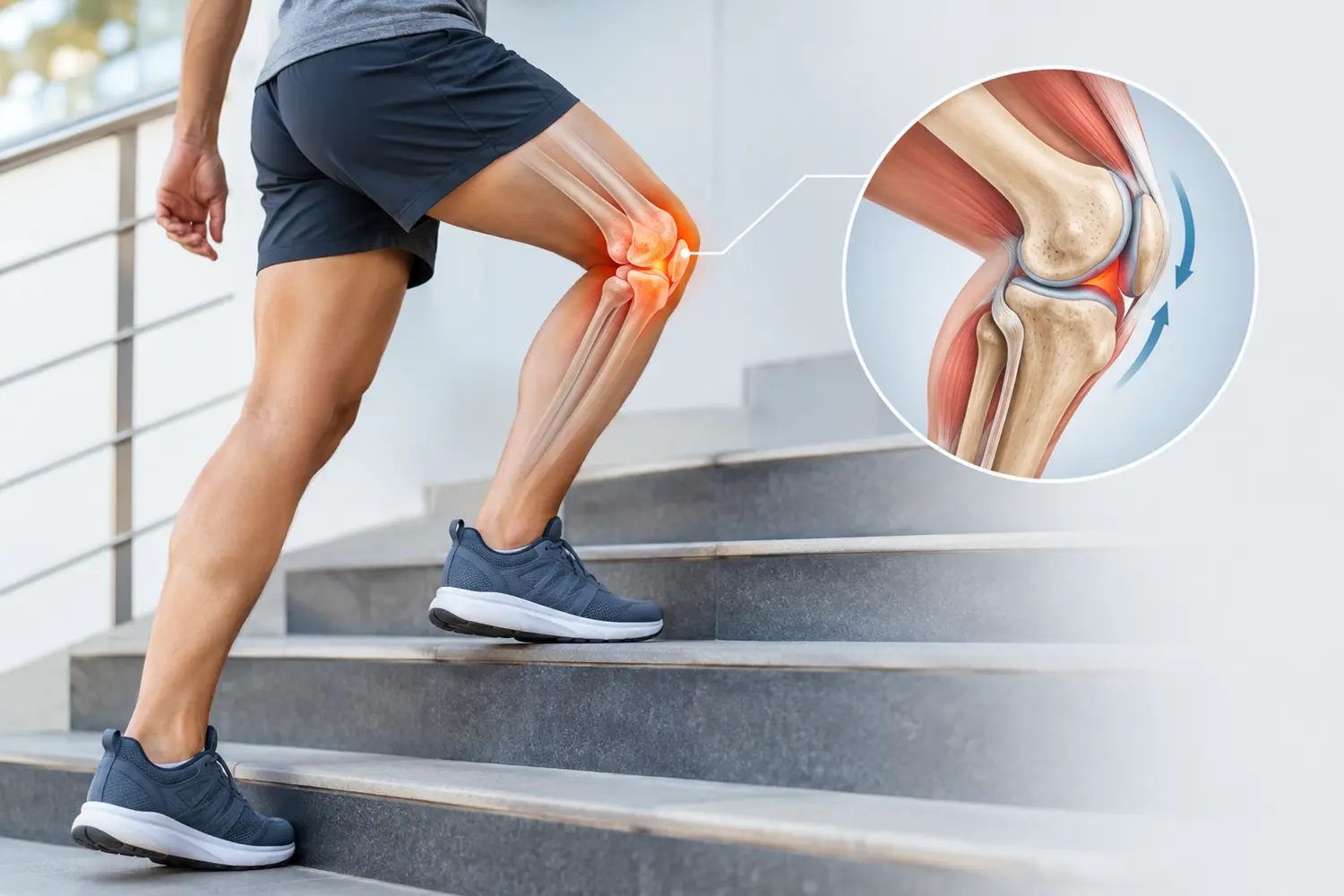
Walking on a flat surface and climbing stairs place different demands on the knee.
When you climb, the knee bends while your leg supports and lifts your body. Going downstairs requires the muscles around the knee to control your body as you lower yourself. These changes can make pain more noticeable if a structure around the knee is irritated or not tolerating the activity well.
This is why you may be able to walk normally but feel pain during stairs.
Pain on stairs does not automatically mean you have arthritis or a serious knee injury. Several different knee conditions can produce a similar symptom pattern.
What Can You Do If Your Knee Hurts While Walking?
This is one of the most common questions people have about stair-related knee pain.
Stairs require more knee bending and muscle effort than level walking. Pain around the front of the knee, for example, is commonly associated with activities that load the knee while it is bent, including climbing or descending stairs.
The pattern of your symptoms can be useful information. Ask yourself:
- Does the pain start on the first few steps or after several flights?
- Is it worse when going up, down, or both?
- Is the pain around the kneecap or somewhere else?
- Do you notice stiffness after sitting or resting?
- Is there swelling?
- Does the knee catch, lock or feel as though it may give way?
These details can help a doctor understand what may be contributing to your symptoms. They cannot, however, replace a clinical examination.
If you also experience discomfort during normal walking, you can read about the possible causes of knee pain while walking.
Common Causes of Knee Pain When Climbing Stairs

Patellofemoral pain
Patellofemoral pain is felt around or behind the kneecap. It commonly becomes worse with activities that repeatedly bend the knee under load, such as stairs, squatting, running or jumping.
It can develop gradually and may be associated with a change in activity, training load or muscle strength. It can also occur in people who are not athletes.
-
Knee osteoarthritis
Osteoarthritis can cause knee pain and stiffness during weight-bearing activities. Some people notice symptoms while walking, using stairs or getting up from a chair.
However, knee pain on stairs by itself does not mean you have osteoarthritis. Other symptoms and the person's overall clinical history need to be considered.
-
Tendon irritation or overuse
A sudden increase in walking, running, gym activity or other repetitive movements can increase the workload on the tissues around the knee.
Tendon irritation may cause pain during activities that repeatedly load the knee. If symptoms began after a noticeable change in your activity level, mention this when seeking medical advice.
-
Meniscus or other internal knee problems
Problems involving the meniscus or other structures inside the knee can cause pain during movement. Some people may also notice clicking, catching, locking or swelling.
A meniscus problem can follow a twisting injury, although changes in the meniscus can also occur gradually with age. Stair pain alone is not enough to identify a meniscus problem.
-
Previous injury or a sudden change in activity
An earlier knee injury can sometimes affect how the joint tolerates certain movements. Similarly, suddenly doing much more exercise, walking or stair climbing than usual can make previously unnoticed symptoms appear.
That does not necessarily mean a new injury has occurred. What matters is whether the symptoms settle with appropriate activity modification or continue to interfere with normal movement.
Does It Matter Whether Your Knee Hurts Going Up or Down Stairs?
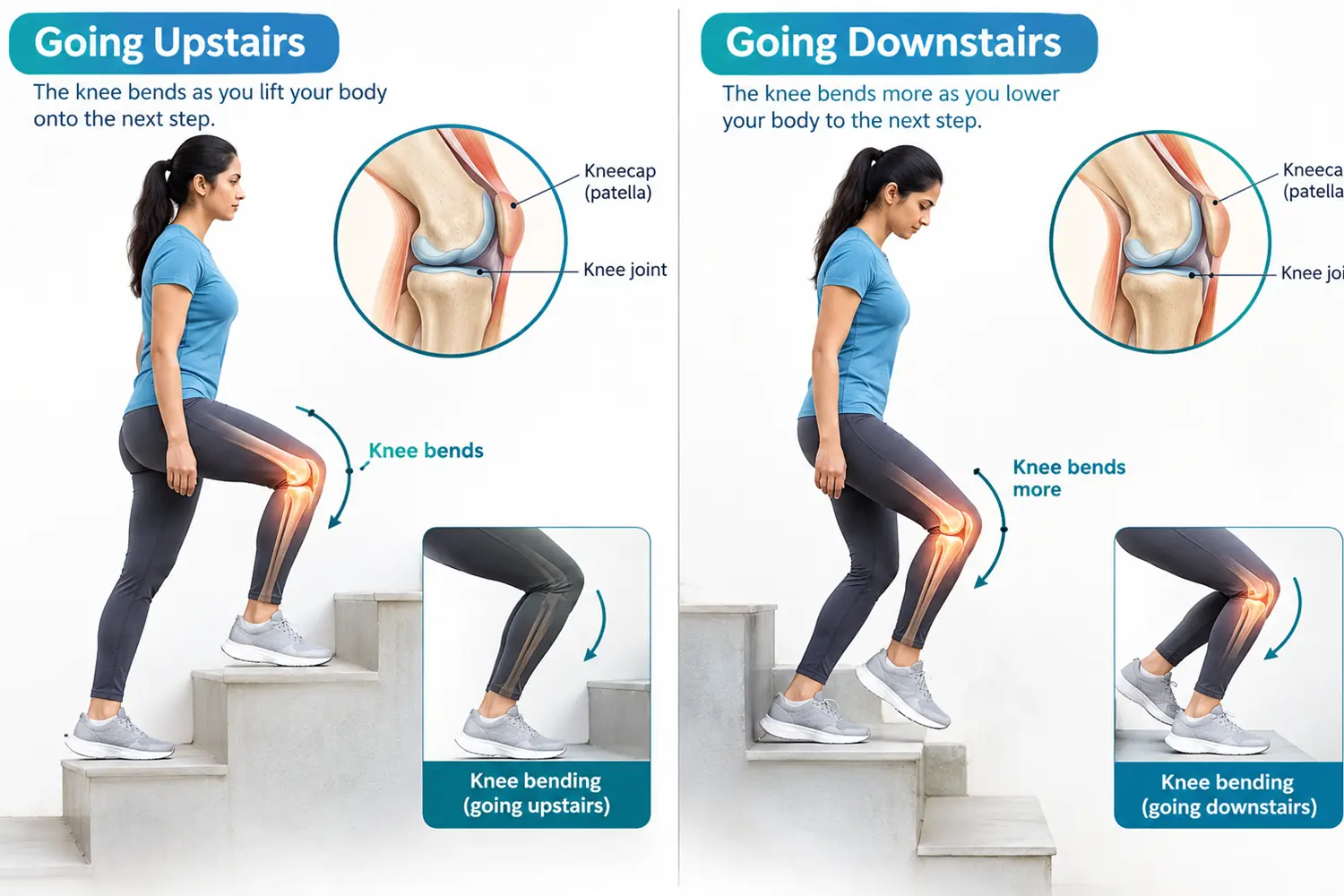
It can be useful to notice which direction causes more pain, but this pattern should not be used to diagnose yourself.
Going upstairs requires your leg to generate force to raise your body. Going downstairs requires the muscles around the knee to control your movement as you lower yourself. Because the movements are different, some people notice more pain in one direction than the other.
For example, pain around the front of the knee can be associated with patellofemoral pain, which may become worse when going up or down stairs.
So, instead of focusing only on whether you hurt going up or down, pay attention to the complete pattern: where the pain is, when it starts and whether other symptoms are present.
What Can You Do About Knee Pain on Stairs?
There is no single home remedy that works for every cause of knee pain.
If stairs clearly increase your pain, temporarily reducing repeated stair use may help. Avoid repeatedly pushing through increasing pain, particularly if the knee becomes more painful after activity.
You can also:
- Use a handrail if you feel unsteady.
- Avoid suddenly increasing exercise or stair climbing.
- Gradually return to activities as your symptoms allow.
- Pay attention to whether the pain is improving or repeatedly returning.
- Avoid starting a specific exercise programme based only on an online symptom description.
Exercise and rehabilitation can be useful for some knee conditions. For example, structured therapeutic exercise is commonly used in managing patellofemoral pain.
But the appropriate exercise depends on the underlying problem. An exercise that is suitable for one condition may not be appropriate for another.
If your knee pain keeps returning or starts affecting your daily activities, you can learn more about knee pain treatment options and the importance of identifying the underlying cause.

When Should You Get Knee Pain on Stairs Checked?
Occasional discomfort after an unusual increase in activity may settle with appropriate activity modification. Persistent or recurring pain deserves more attention.
Consider getting your knee evaluated if:
- the pain keeps returning or is getting worse;
- stairs are becoming increasingly difficult;
- the pain interferes with walking, exercise, work or daily activities;
- you develop significant swelling or stiffness;
- the knee catches, locks or repeatedly gives way; or
- The pain started after a significant injury or twisting movement.
Seek prompt medical attention after a significant injury if you cannot bear weight, cannot move the knee normally or notice an obvious deformity. A red, hot and swollen knee accompanied by fever also requires prompt medical assessment.
FAQs
Why does my knee hurt going downstairs but not walking?
Going downstairs requires the muscles around the knee to control your body as you lower yourself. This can make certain types of knee pain more noticeable than during level walking. Pain around the kneecap, for example, can worsen when descending stairs.
Can knee pain when climbing stairs happen without swelling?
Yes. Some causes of activity-related knee pain may occur without obvious swelling. The absence of swelling does not identify the cause or rule out a knee problem. If the pain persists or repeatedly interferes with activity, an evaluation can help determine what is causing it.
Can knee pain when climbing stairs happen without an injury?
Yes. Knee pain can develop without a specific fall, twist or other injury. Patellofemoral pain, osteoarthritis, overuse and other conditions can cause symptoms during activity.
The Bottom Line
Knee pain when climbing stairs can have several causes, from pain around the kneecap and activity-related irritation to osteoarthritis, previous injury and other knee problems.
If your knee hurts on stairs but not while walking, don't assume that the symptom automatically means arthritis or a serious injury. Notice when the pain starts, whether going up or down is worse, where you feel it and whether you have swelling, stiffness, locking or instability.
If the pain keeps returning, becomes worse or starts affecting your normal activities, a clinical evaluation can help identify the underlying problem and guide appropriate care.
Medically reviewed by Dr. Mohana Gadre
M.B.B.S., D.A., D.N.B., F.I.P.M., IAPC
Pain Management Specialist & Anaesthesiologist

 Call Now